HealFern may earn a commission if you buy through links on this page, at no extra cost to you. That does not change what we report.
Part of our Illuderma overview. Last checked November 5, 2026.
Illuderma for dark spots is unproven: no study has tested this 30 ml serum on dark spots, and the vendor publishes no concentrations for any of its 15 named ingredients.[1] The product also carries no SPF rating, even though its sales page promises protection from "radiation".
That leaves the steps dermatologists put first for dark spots: a broad-spectrum sunscreen every day, and a skin check for any spot that is new or changing.
Illuderma for dark spots: does it work?
Nobody knows, because Illuderma itself has never been studied. The vendor lists 27 references on its site, and none of them tests this serum.[2] They cover single ingredients in other settings, such as a horsetail ointment after childbirth and oral vitamin C in adults with obesity.
The sales page says dark spots "are NOT a sign of aging" and come from "blue modern radiation that oxidizes the skin".[1] That phrase is not a dermatology term. It is the vendor's own theory.
Some ingredients, such as vitamin C and green tea, are common in skin-care products, but the label never says how much of either is in the bottle. For witch hazel, horsetail, gotu kola, rosemary, Scots pine and the unnamed "Graveolens", we found no human trials of these topicals for dark spots at unknown concentrations. A guess about strength is all any reader can make.
What do the facts show?
The facts show a serum sold with strong claims and very little disclosure. We compared each sales claim with what the vendor actually publishes on its sales, references, pricing and refund pages, all read on November 5, 2026.
| Topic | What the vendor says | What we found |
|---|---|---|
| Cause of dark spots | "Blue modern radiation" | Vendor theory, no dermatology source |
| Sun protection | Lemon peel and Scots pine give "Ultimate radiation protection" | No SPF rating, not labeled as a sunscreen |
| Ingredient amounts | "16 powerful natural ingredients" | 15 named, no amounts, no full ingredient list |
| Studies | 27 references | None tests Illuderma |
| Speed | Testimonials report results "within a week" | Unverified customer quotes |
| Manufacturing | An FDA facility approval | FDA does not approve cosmetics or facilities; facility not named |
The sunscreen gap
The biggest practical issue is sun protection. Illuderma's sales copy describes a "24/7 shield", yet the bottle lists no SPF.[1] Sun exposure darkens existing spots, so skipping sunscreen because a serum promises "protection" can work against the goal.
A broad-spectrum sunscreen, worn every morning and reapplied outdoors, is the step dermatologists put first for dark spots. It works alongside any serum you choose. If you only have budget for one product, the sunscreen is the better buy.
There is a second twist. Illuderma contains lemon peel. Citrus plants hold furocoumarins, compounds that can cause a sun-triggered skin reaction called phytophotodermatitis, documented mainly with lime.[5] Nobody has measured how much is in this serum, but it is one more reason to wear sunscreen over it.
What the ingredient evidence covers
- Aloe, hyaluronic acid, vitamin E: the studies we hold are oral, for gut, knee and eye outcomes, not skin pigment. See the full Illuderma ingredient breakdown.
- Hops: oral studies cover menopause symptoms, and hops contain a strong plant estrogen.[6]
- Witch hazel, horsetail, gotu kola, rosemary, Scots pine, Graveolens: no human trials as topicals for dark spots at unknown strength.
What a fair test of Illuderma would need
A useful study of a dark-spot serum would name every ingredient and its strength, compare the serum with a plain base, require sunscreen in both groups, and measure spots with photos over weeks. Illuderma has none of that. Its evidence is a reference list about single ingredients plus customer quotes.
The vendor also says the formula suits "all ages, medical conditions, and skin types".[1] No study supports that blanket line.
What it costs to try
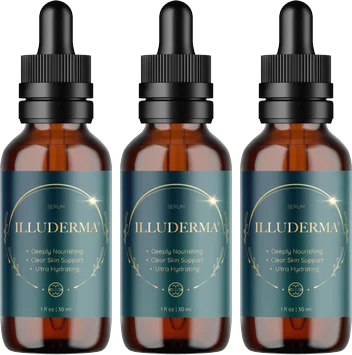
The single bottle costs $69, checked November 5, 2026, and the vendor counts it as 30 days of use, or $2.30 a day.[3] The 6-bottle bundle is $294, or $1.63 a day. Buying six bottles before you know how your skin reacts ties up money in a product with no track record. Our Illuderma price guide compares every bundle.
What should you check before buying?
Check what the spot is, then check the terms. A serum cannot tell you whether a mark is harmless, and the vendor publishes no company name or phone number, only an email address, if you need help later.[7]
- Have a dermatologist look at any spot that is new, growing, changing color or shape, or bleeding, to rule out skin cancer.
- Ask about melasma if the patches are on both cheeks, the forehead or upper lip; a dermatologist has prescription and in-office options.
- Budget for a broad-spectrum sunscreen; Illuderma does not replace it.
- Patch-test on the inner arm first, since the full ingredient list is not published. Our Illuderma side effects guide covers what to watch for.
- Know the refund rule: 60 days from delivery, and every bottle goes back at your cost.[4]
- Decline post-checkout upsells you did not plan for.
For marks left behind by breakouts, our main-site guide to acne scars explains the options dermatologists use.
See a doctor right away if a spot:
- appears suddenly as an adult, or looks different from your other spots
- bleeds, itches, crusts or will not heal
- has an uneven border or more than one color
- grows or changes over a few weeks
Our take
Illuderma might feel pleasant on the skin, but nothing published shows it fades dark spots, and its strength is unknown. If you want to try it anyway, buy one bottle, keep using sunscreen, follow the application directions and tracking steps, and judge it by photos inside the 60-day refund window. Our look at whether Illuderma works and our research method explain how we reached this view.
Back to the Illuderma overview.
Frequently asked questions
Does Illuderma fade dark spots?
No study shows it does. Illuderma has never been tested as a product, the vendor discloses no ingredient amounts, and its 27 listed references cover single ingredients in other settings. Any change you see cannot be linked to a known dose.
Does Illuderma have SPF?
No. The sales page talks about radiation protection from lemon peel and Scots pine, but the bottle lists no SPF rating and is not labeled as a sunscreen. You still need a broad-spectrum sunscreen every day if you want to protect dark spots.
Can Illuderma help melasma?
There is no evidence it does. Melasma is a long-lasting pigment condition that a dermatologist should diagnose, since it has prescription and in-office options. Illuderma has no study in melasma and no published ingredient strengths to judge it by.
How long before Illuderma shows results on dark spots?
Nobody has measured it. Testimonials on the sales page mention results within a week, but they are unverified quotes. If you try it, take dated photos in the same light and decide inside the 60-day refund window, counted from delivery.
What works for dark spots instead of Illuderma?
Daily broad-spectrum sunscreen is the step dermatologists put first, because sun exposure darkens spots. A dermatologist can confirm what the spot is, rule out skin cancer, and discuss prescription or in-office options that have been studied.
Sources
- Illuderma sales page. theilluderma.com (vendor), read November 5, 2026.
- Illuderma references page. theilluderma.com (vendor), read November 5, 2026.
- Illuderma bundle pricing data. theilluderma.com (vendor), read November 5, 2026.
- Illuderma refund policy. theilluderma.com (vendor), read November 5, 2026.
- PubMed 38387001: citrus phytophotodermatitis report. National Library of Medicine, read October 27, 2026.
- PubMed 29543713: 8-prenylnaringenin, the hop phytoestrogen. National Library of Medicine, read November 5, 2026.
- Illuderma contact and FAQ page. theilluderma.com (vendor), read November 5, 2026.
This page is general information, not medical advice. Dietary supplements are not reviewed by the FDA for safety or effectiveness before they are sold and are not intended to diagnose, treat, cure or prevent any disease. Talk to your doctor before taking any supplement, especially if you are pregnant, nursing, take medication or have a health condition.